A deload week is the part of a program clients question most. They feel like they are losing a week, and some coaches skip it for the same reason. Then week nine comes, lifts stall, joints ache and the client starts missing sessions.
This guide covers what a deload is for, how often to plan one, the signs that a client needs one early, and three ways to program it so the week after feels better than the week before.
What is a deload week?
A deload week is a short, planned drop in training stress. The client still trains, with the same exercises and schedule, but with less volume, less load or both.
- It is not a week off. Clients keep the habit and the movement patterns. Only the effort goes down.
- It is planned, not a reaction. A deload written into the program feels like part of the plan. One added after a bad week feels like a step back.
- It protects the next block. Fatigue builds faster than fitness shows. A lighter week lets it clear so the client starts the next block fresher.
How often should clients deload?
A common starting point is one deload every four to eight weeks of hard training. Where a client falls in that range depends on how hard and how often they train, and on everything outside the gym.
- Closer to every four weeks: experienced lifters, clients training five or more days a week, and anyone in a calorie deficit.
- Closer to every six to eight weeks: beginners, clients training two or three days a week, and anyone whose loads are still light.
- Around life, when you can: a planned trip, exams or a busy month at work is a good place to put a deload instead of fighting it.
What are the signs a client needs a deload?
The clearest sign is performance dropping across several sessions in a row while the program has not changed. A single bad day is noise. A pattern is a signal.
If clients log their sets, most of this is already in front of you. You only have to look at the trend instead of the last workout. How to plan progressive overload for clients
How do you program a deload week?
Keep the exercises and the schedule, and cut one or two of volume, load and effort. Pick the one that fits the client. Where deloads fit in an online training program
- 1Cut volume (the default)Same exercises and similar weights, about half the sets. This keeps technique sharp and suits most clients.
- 2Cut loadSame sets and reps at noticeably lighter weights. Useful for clients who like routine and would feel lost doing fewer sets.
- 3Cut both, for very tired clientsFewer sets at lighter weights, every set well short of failure. Use it after a hard block or a stressful stretch of life.
- 4Tell the client whyOne line in the program or a message: this week is lighter on purpose so next week you can push again. It prevents the extra sets they would add on their own.
How Coach+ helps with deloads
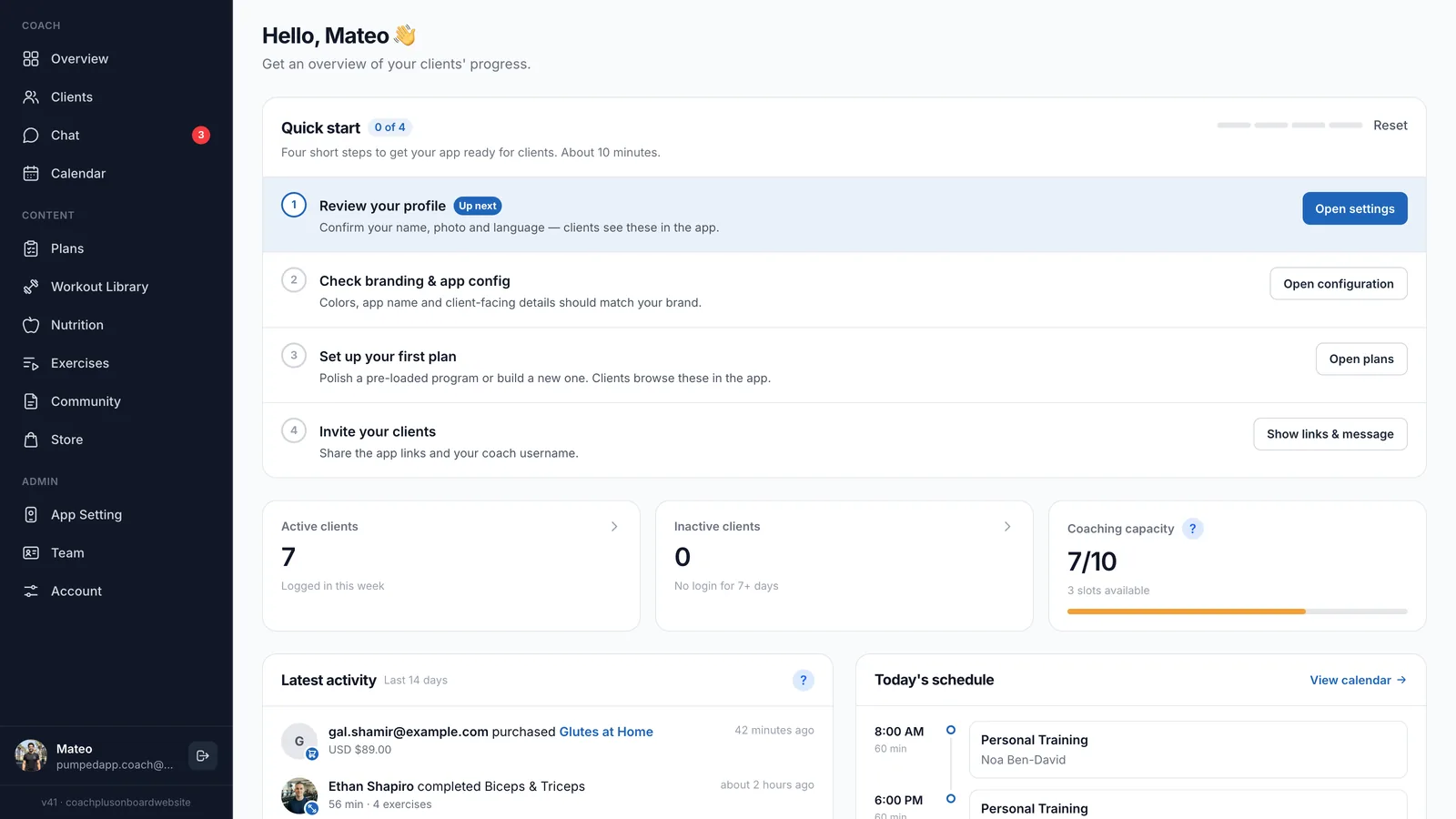
In Coach+ you build programs in the workout builder and clients log them set by set in your branded app, so deloads are part of the plan and the data to time them is already there.
- A workout and plan builder with 500+ exercises with demo videos, plus your own custom exercises, so a deload week sits inside the program like any other week.
- The AI workout analyzer reviews a client’s logged workouts and gives one recommendation, which you apply with one tap.
- AI can draft a program for you to review before the client sees it, or turn your existing Excel or PDF program into a plan.
- Weekly check-ins with progress photos and messaging, so you can explain the lighter week and hear how the client feels.