Portion Based Meal Plan: How Coaches Build One With the Hand Portion Method
7 min read · Updated Oct 13, 2026
Short answer
A portion based meal plan sets how many portions of protein, carbs, fats and vegetables a client eats per meal instead of a calorie target. In the hand portion method, a palm is protein, a cupped hand is carbs, a thumb is fat and a fist is vegetables. Precision Nutrition suggests one to two of each per meal to start.
A portion based meal plan tells a client how many portions of protein, carbs, fats and vegetables to eat at each meal, instead of giving them a calorie number to hit. Many clients find it easier to follow than weighing and logging every gram, especially in the first months of coaching.
This guide covers the portion units, how to turn macro targets into portions with a worked example, a sample day, when counting is the better tool, and how to adjust portions from weekly check-ins. Keep nutrition guidance within your qualification, and refer clients with medical conditions to a dietitian.
What is a portion based meal plan?
It’s a meal plan written in portions per meal rather than calories or grams. Each portion is a rough amount of one food type, so the client learns to build a plate by eye instead of weighing it.
- Hand portions. The most common version. The client’s own hand is the measuring tool, which is always available and roughly scales with body size.
- Exchange lists. Some coaches and dietitians define each portion as a set weight of a food, such as a fixed amount of rice or chicken, and give the client a list of swaps. The idea is the same; only the measuring tool changes.
This guide uses hand portions, because they need no scale and still work at restaurants and family meals.
What are the hand portion units?
There are four units, one per food type. The numbers are approximations per portion for women and men, according to Precision Nutrition’s article on hand portion math (updated March 2026).
- Palm = protein. Chicken, meat, fish, eggs, cottage cheese, Greek yogurt, tofu, in the thickness and size of the palm. About 22 g protein for women and 24 g for men.
- Cupped hand = carbs. Rice, oats, bread, potatoes, legumes, fruit. About 22 g carbs for women and 25 g for men.
- Thumb = fats. Olive oil, tahini, nuts, seeds, nut butter, avocado, cheese. About 8 g fat for women and 9 g for men.
- Fist = vegetables. Non-starchy vegetables such as salad, cucumbers, peppers and broccoli. About 5 g carbs and 25 calories.
Precision Nutrition’s starting point for most people is one to two palms of protein and one to two fists of vegetables at each meal, plus one to two cupped hands of carbs and one to two thumbs of fat at most meals. The article describes the numbers as averages with known error, so treat them as a first draft and adjust from results.
How do you convert macros to portions?
Start from the client’s macro targets and work through the food types in order: vegetables, protein, carbs, then fats. The targets can come from your own assessment or the free macro calculator.
- 1
Set vegetables first
Pick a daily number of fists, usually one or two per meal. Each fist adds about 5 g carbs.
- 2
Divide protein by the palm value
Protein target ÷ 22 for women or 24 for men. Round down, because the other portions add a little protein too.
- 3
Fill carbs from what’s left
Subtract about 5 g per fist and 2 g per palm from the carb target, divide by 22 or 25, and round.
- 4
Fill fats from what’s left
Subtract about 4 g per palm and 1 g per cupped hand from the fat target, divide by 8 or 9, and round.
- 5
Total and adjust
Add up protein, carbs and fat across all portions. If one is far off, move one portion at a time until the totals are close.
Example: turning macro targets into portions
A hypothetical client: a woman with targets of 130 g protein, 180 g carbs and 60 g fat, about 1,780 calories. The women’s values from the table above apply.
- Vegetables: 5 fists a day, adding about 25 g carbs.
- Protein: 130 ÷ 22 ≈ 5.9, rounded down to 5 palms.
- Carbs: (180 − 25 − 10) ÷ 22 ≈ 6.6, rounded down to 6 cupped hands.
- Fats: (60 − 20 − 6) ÷ 8 ≈ 4.3, rounded to 4 thumbs.
- Totals: about 144 g protein, 175 g carbs, 58 g fat and 1,795 calories.
Protein lands a little above target and carbs a little below, which is close enough for a portion plan. The client gets one short instruction: 5 palms, 5 fists, 6 cupped hands and 4 thumbs a day.
When does a portion plan beat counting calories?
A portion plan works better when consistency matters more than precision, which is the case for most general-population clients.
- New clients. Learning four units is easier than learning a tracking app in the first week.
- Clients who burned out on tracking. Hand portions keep structure without daily logging.
- Eating out and family meals. A hand works at a restaurant or a family dinner. A kitchen scale doesn’t.
- Maintenance phases. After a goal is reached, portions help the client hold it without counting forever.
Counting is the better tool when precision matters: a client who has stalled on portions and needs tighter numbers, a physique competitor close to a show, or someone who simply likes data. Many coaches start with portions and switch to tracking only if progress stalls.
Sample portion based meal plan for one day
This is an example built from the worked numbers above (5 palms, 5 fists, 6 cupped hands, 4 thumbs). It isn’t a recommendation for any specific person.
- Breakfast: 1 palm of eggs or cottage cheese, 2 cupped hands (bread and a piece of fruit), 1 fist of chopped salad, 1 thumb of olive oil.
- Lunch: 2 palms of chicken breast, 2 cupped hands of rice, 2 fists of vegetables, 1 thumb of tahini.
- Snack: 1 palm of Greek yogurt, 1 cupped hand of fruit, 1 thumb of nuts.
- Dinner: 1 palm of fish, 1 cupped hand of potatoes, 2 fists of vegetables, 1 thumb of avocado.
The client can move portions between meals as long as the daily count stays the same.
How do you adjust portions from check-ins?
Change one portion at a time based on the weekly trend, not a single weigh-in.
- Weight flat for 2–3 weeks on a fat loss goal: remove one cupped hand or one thumb a day.
- Constantly hungry or training feels flat: add one cupped hand around training, or one palm.
- Gaining faster than planned on a muscle gain goal: remove one thumb or one cupped hand.
- Not hitting the portions at all: simplify. Fix two meals first instead of changing the numbers.
Add a question like “How many days did you hit your portions?” to the weekly check-in, so you can tell a plan problem from an adherence problem. The guide on client check-ins covers the rest of the form.
How Coach+ helps you deliver a portion plan
A portion plan only works if the client sees it when deciding what to eat. With the Coach+ coaching platform, the plan lives in the client’s branded app instead of a PDF lost in their downloads.
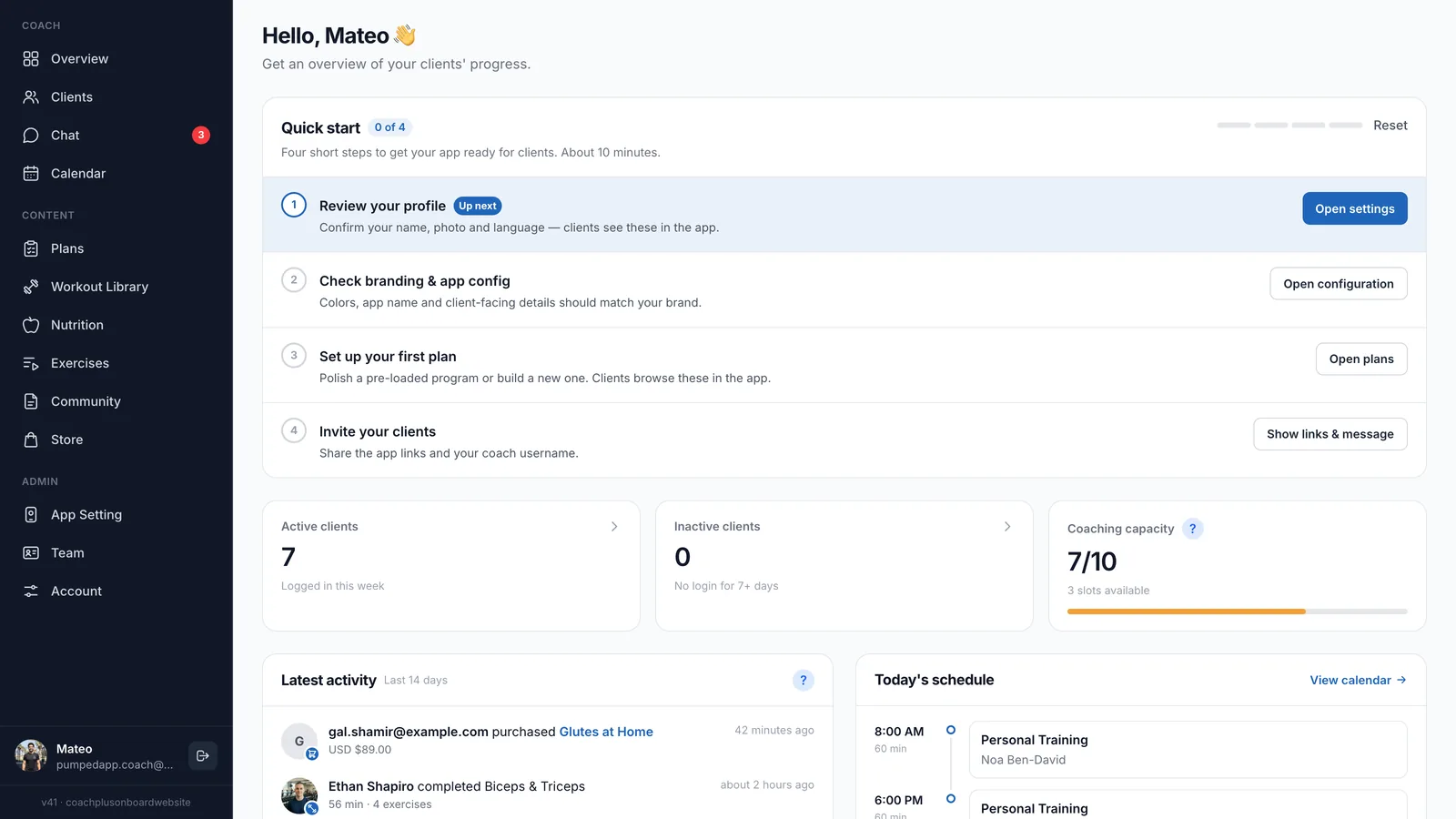
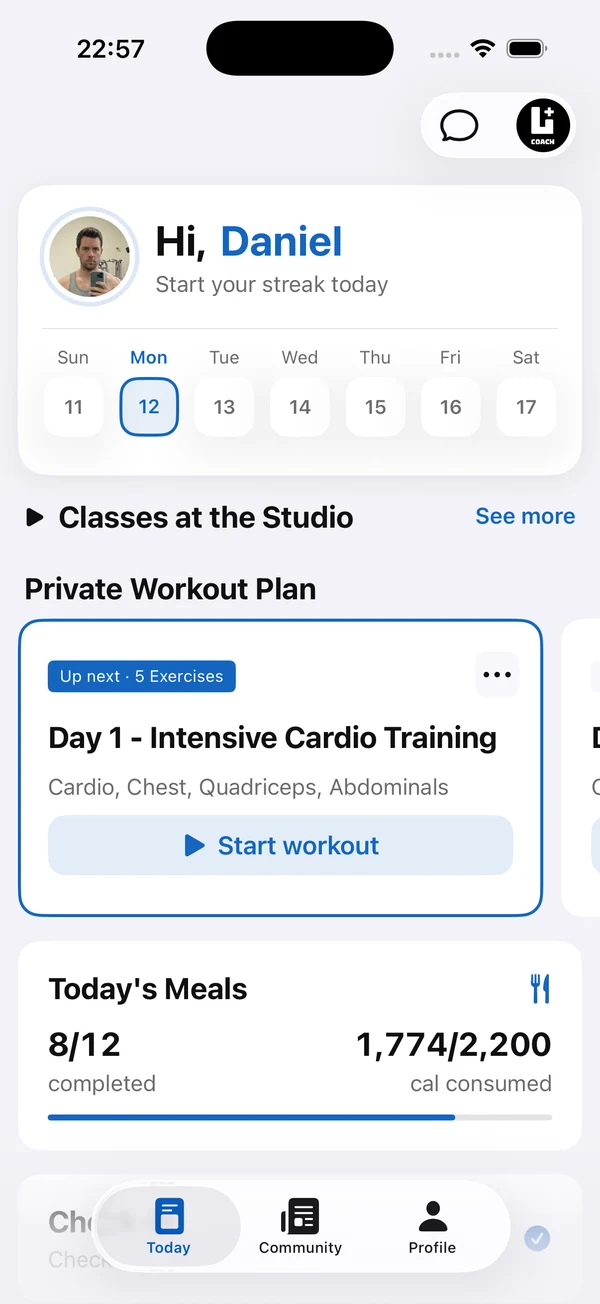
- Build the meal plan in the coach dashboard, and it appears in the client’s app next to their workouts.
- Let the AI assistant draft a meal plan, then review and edit it before the client sees it.
- Clients who move from portions to tracking can log food by barcode, photo or search.
- Weekly check-ins with progress photos, and messaging with push notifications, make portion changes quick to send.
Quick checklist
- Get macro targets from your assessment or the macro calculator
- Set vegetables, then protein, then carbs and fats
- Total the portions and adjust one at a time
- Give the client one daily count, not a spreadsheet
- Ask about portion adherence in the weekly check-in
- Switch to counting only if progress stalls or precision matters
Frequently asked questions
How many hand portions should you eat per meal?
Precision Nutrition’s starting point for most people is one to two palms of protein and one to two fists of vegetables per meal, plus one to two cupped hands of carbs and thumbs of fat at most meals. Adjust from there based on goal and results.
Is the hand portion method accurate?
It’s an estimate. The values per portion are averages with known error, so the real check is the weekly trend in weight, measurements and energy, with changes of one portion at a time.
Can you lose weight on a portion based meal plan?
Yes, if the total portions put the client in a calorie deficit. If weight doesn’t move for two to three weeks, remove one cupped hand or one thumb a day.
Does a portion plan work for vegetarian clients?
Yes. Palms of protein can come from eggs, dairy, tofu or tempeh, while legumes usually count as a cupped hand of carbs that also adds some protein. Check the protein total, since plant sources often bring more carbs.
Can you deliver a portion plan in Coach+?
You can build the meal plan in the Coach+ dashboard and clients see it in your branded app, with weekly check-ins and messaging for adjustments. Clients who move to tracking can log food by barcode, photo or search.