Macro Calculator: How to Calculate Your Protein, Carbs and Fat
Short answer
A macro calculator splits your daily calories into protein, fat and carbs. Protein is set by body weight: 2.0 g per kg for fat loss, 1.6 for maintenance and 1.8 for muscle gain. Fat is 25% of calories divided by 9. The remaining calories go to carbs, divided by 4.
Not sure? Use the calorie calculator first.
Protein
120 g
22% of calories
Carbs
293 g
53% of calories
Fat
61 g
25% of calories
This macro calculator turns a daily calorie target into grams of protein, fat and carbs. Enter your calories, body weight and goal, and you get each macro in grams and as a share of your total calories.
It doesn’t work out your calories for you. If you don’t have a number yet, start with the calorie calculator and bring the result here. Results are estimates and not medical advice.
How to use the macro calculator
- 1
Enter your daily calories
Use your maintenance calories, or the fat loss or muscle gain number from a calorie calculator.
- 2
Enter your body weight
Protein is set per kilogram of body weight, so use your current weight, not a goal weight.
- 3
Choose your goal
Fat loss, maintenance or muscle gain. The goal changes the protein target. Fat stays at 25% of calories.
- 4
Read your targets
You get protein, fat and carbs in grams and as a percentage of calories. Track the grams day to day; the percentages are there for context.
How are macros calculated?
Macros are calculated in three steps: protein from body weight, fat as a fixed share of calories, and carbs from whatever is left.
- Protein: body weight in kg × 2.0 for fat loss, 1.6 for maintenance or 1.8 for muscle gain (about 0.91, 0.73 and 0.82 g per lb). Each gram has 4 kcal.
- Fat: 25% of daily calories, divided by 9 kcal per gram.
- Carbs: daily calories minus the calories from protein and fat, divided by 4 kcal per gram.
Example: at 70 kg and 2,000 kcal a day with a fat loss goal, the macro calculator gives 140 g protein (560 kcal, 28%), about 56 g fat (500 kcal, 25%) and 235 g carbs (940 kcal, 47%).
What macros should you eat to lose weight?
For weight loss, eat enough protein to protect muscle, a moderate amount of fat, and let carbs fill the rest of a calorie deficit. The deficit does most of the work, which is why the calculator raises protein to 2.0 g per kg on a fat loss goal, compared with 1.6 g per kg at maintenance.
- Higher protein helps keep muscle while you eat less and makes meals more filling.
- Fat at 25% is enough for normal meals without crowding out carbs.
- Carbs drop as calories drop, since they fill what’s left. They are still the main fuel for hard training.
Consistency beats precision. Hitting your calories and protein most days does more than perfect numbers twice a week.
How coaches use macro targets with clients
Personal trainers and online coaches usually set calories first, then macros, then simplify. Many clients do well tracking only calories and protein, with fat and carbs as a loose range.
- Start with calories and protein. They are the two numbers clients can hit most easily and the ones that matter most for results.
- Adjust from check-ins. If weight hasn’t moved in the expected direction after two to three weeks, change calories and recalculate the macros.
- Recalculate when weight changes. Protein is tied to body weight, so a client who has lost several kilograms needs new numbers.
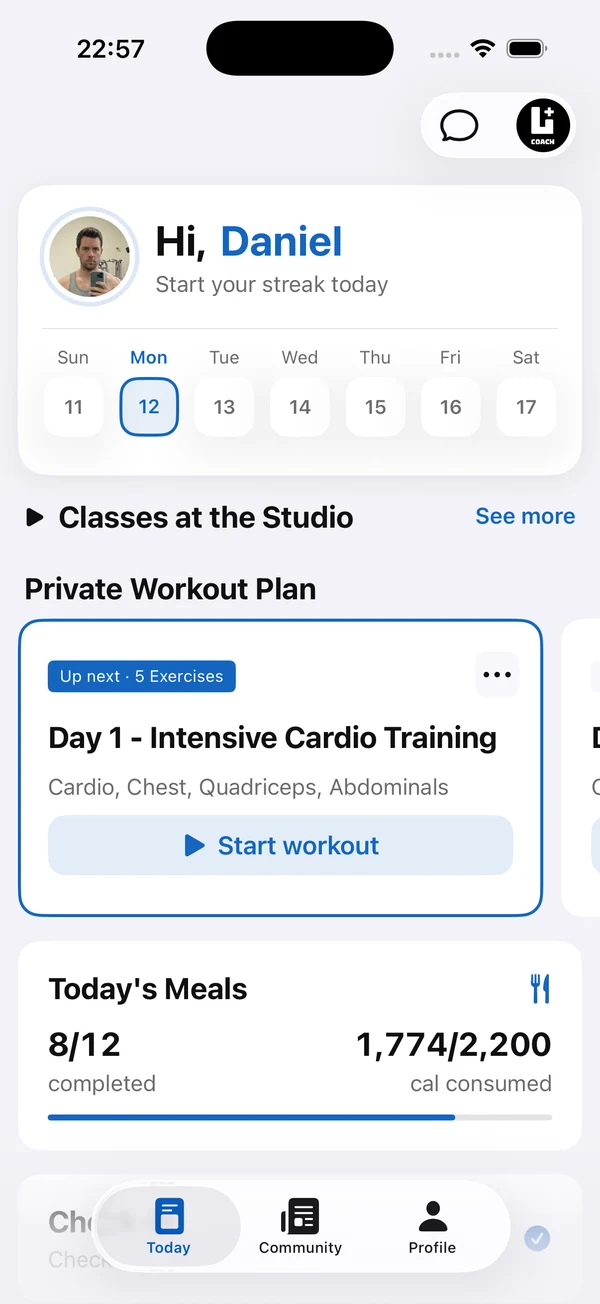
On the Coach+ coaching platform, you build each client a meal plan with macro targets, and clients log food in your branded app by barcode, photo or search, so you see daily protein, carbs and fat against the plan. The AI assistant can draft a meal plan for you to review, and weekly check-ins with progress photos show whether the numbers are working.
Frequently asked questions
How do I calculate my macros?
Set protein by body weight (1.6 to 2.0 g per kg depending on your goal), set fat at 25% of calories divided by 9, and divide the remaining calories by 4 to get carbs. You need a daily calorie target first.
What is a good macro ratio for weight loss?
There is no single best ratio. With protein at 2.0 g per kg and fat at 25%, a 70 kg person eating 2,000 kcal lands at about 28% protein, 25% fat and 47% carbs. Hitting calories and protein matters more than the exact split.
Should I count macros or calories?
Calories decide whether your weight goes up or down; macros affect how much of that change is muscle or fat and how full you feel. A simple middle ground is to track calories and protein and let carbs and fat vary.
How many calories are in a gram of protein, carbs and fat?
Protein and carbs have about 4 kcal per gram and fat about 9 kcal per gram. Alcohol has about 7 kcal per gram, which counts toward calories but not toward any of the three macros.
How often should I recalculate my macros?
Recalculate when your calorie target changes or your body weight changes by a few kilograms, since protein is set per kg. Otherwise keep the same numbers for at least two to three weeks before judging them.