Lean Body Mass Calculator: Lean Mass and FFMI
Short answer
Lean body mass is body weight minus fat mass. Multiply your weight by (1 − body fat % ÷ 100) to get lean mass, then divide lean mass in kg by height in meters squared to get FFMI, the fat-free mass index. At 80 kg and 15% body fat, lean mass is 68 kg.
Lean body mass
135.3 lb
FFMI
20
Normalized FFMI
20.3
adjusted to 1.8 m height
Fat mass
29.7 lb
This lean body mass calculator turns your height, weight and body fat percentage into lean body mass, fat mass and FFMI (fat-free mass index), plus a normalized FFMI adjusted for height. Lean mass says more about training progress than scale weight alone, because two people at the same weight can carry very different amounts of muscle.
The results are only as accurate as the body fat percentage you enter. They are estimates and not medical advice.
How to use the lean body mass calculator
- 1
Enter your height
Height is used only for FFMI and normalized FFMI.
- 2
Enter your weight
Current body weight. Weighing in the morning, before eating, gives the most consistent number.
- 3
Enter your body fat percentage
From the body fat calculator (U.S. Navy tape method), skinfold calipers, a smart scale or a DEXA scan. Use the same method each time you recalculate.
- 4
Read your results
Lean mass and fat mass in kg, FFMI, and normalized FFMI for comparing people of different heights.
What is lean body mass?
Lean body mass is everything in your body that isn’t fat: muscle, bones, organs, skin and water. It isn’t the same as muscle mass, but changes in lean mass over weeks of strength training mostly reflect muscle, along with the water and glycogen stored in it.
Fat mass is the rest: weight × body fat %. Tracking both shows whether a change in weight came from fat, lean mass or both.
How is FFMI calculated?
FFMI is lean body mass in kg divided by height in meters squared, the same structure as BMI but with lean mass instead of total weight. The lean body mass calculator works it out in four steps:
- Lean mass: weight × (1 − body fat % ÷ 100).
- Fat mass: weight − lean mass.
- FFMI: lean mass (kg) ÷ height (m)².
- Normalized FFMI: FFMI + 6.1 × (1.8 − height in m).
The normalized version adjusts FFMI to a height of 1.80 m, because taller people tend to score slightly higher at the same build. Example: at 1.75 m, 80 kg and 15% body fat, lean mass is 68 kg, fat mass is 12 kg, FFMI is 68 ÷ 1.75² = 22.2 and normalized FFMI is 22.2 + 6.1 × 0.05 = 22.5.
What is a good FFMI?
There is no official healthy FFMI range. As a rough guide, men who train often land somewhere around 18 to 22, with higher values after years of strength training, and women usually score lower than men at a similar training level.
A commonly cited 1995 study by Kouri and colleagues found that a normalized FFMI above about 25 was rare among men who had not used anabolic steroids. It’s an observation from one group of athletes, not a hard limit, and it proves nothing about any individual.
For coaching, the useful comparison is a client against their own earlier numbers, not against a chart.
How coaches use lean body mass with clients
Personal trainers and online coaches use lean mass to judge whether a phase is working. During a cut, the goal is to lose fat mass while lean mass stays close to flat. During a muscle-gain phase, lean mass should rise faster than fat mass.
- Stick to one method. Body fat estimates vary between methods, so compare tape measurements with tape measurements and scans with scans.
- Recalculate every few weeks, not every day. Small weekly changes are within measurement error. Look at the trend over a month or more.
- Pair it with photos and strength. Progress photos and rising lifts confirm what the numbers suggest.
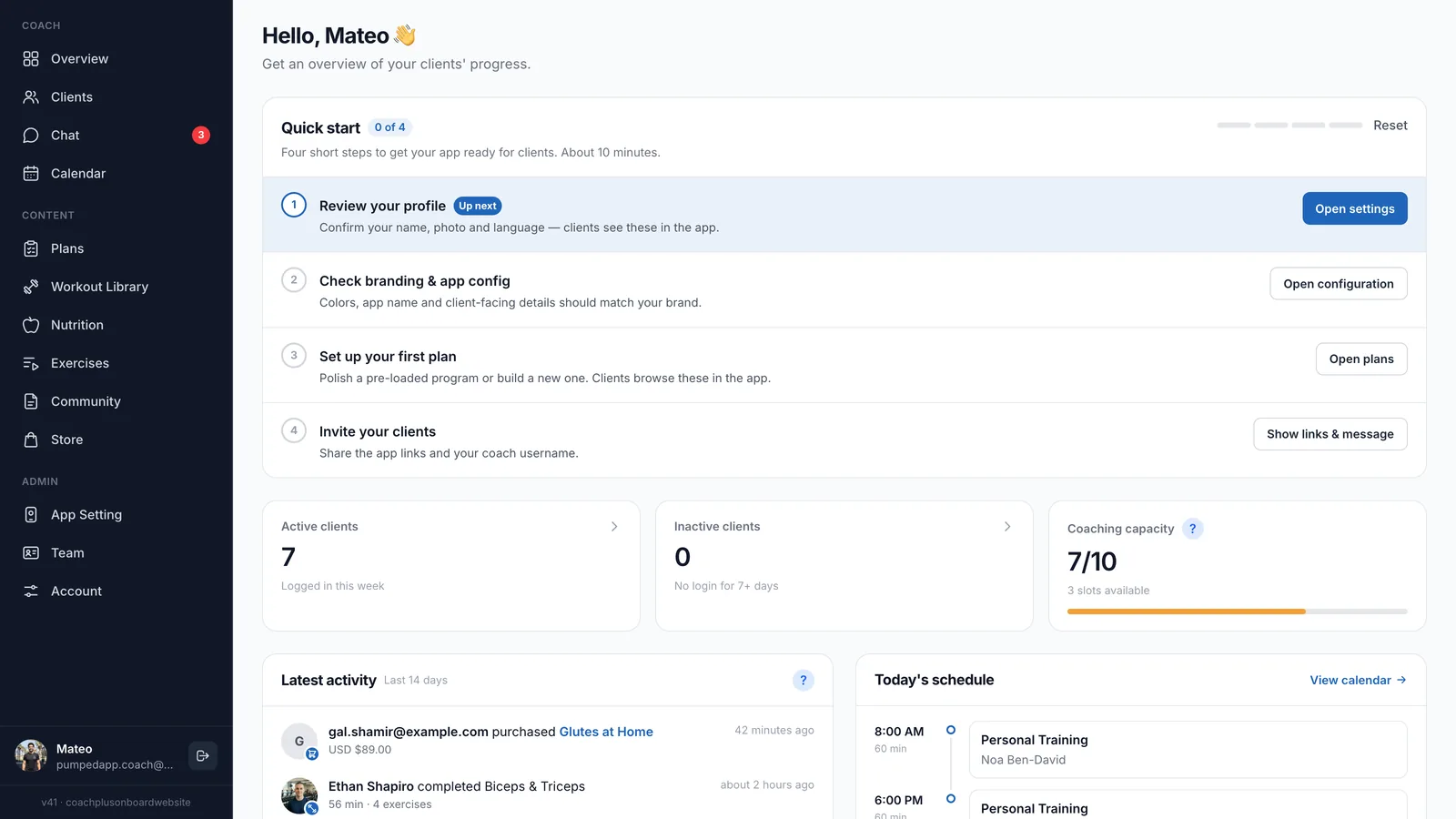
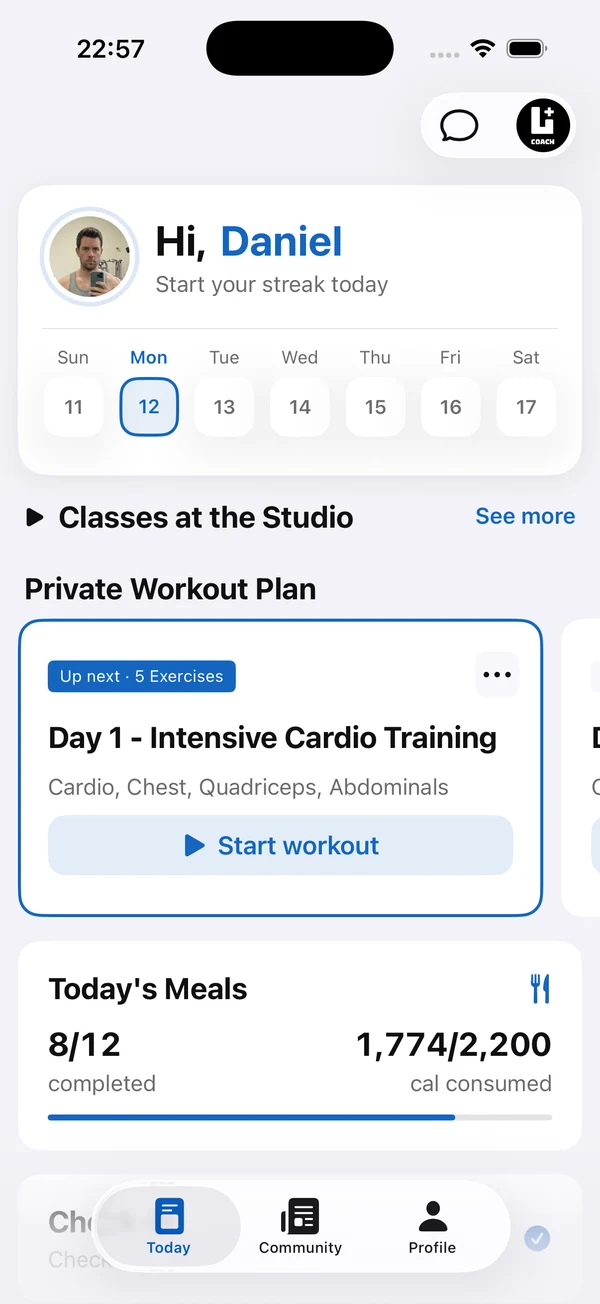
On the Coach+ coaching platform, clients log workouts and food in your branded app, and weekly check-ins with progress photos keep a visual record next to their training. The AI assistant drafts training programs and meal plans that you review, so you can update the plan as soon as the numbers change.
Frequently asked questions
What is lean body mass?
Lean body mass is your total weight minus fat mass: muscle, bones, organs, skin and water. At 80 kg and 20% body fat, lean body mass is 64 kg.
Is lean body mass the same as muscle mass?
No. Muscle is the largest part of lean mass in most active people, but lean mass also includes bones, organs and water. Changes in lean mass over a training block are a reasonable proxy for muscle change.
What is a good FFMI?
There’s no official standard. Men who train often score around 18 to 22 and women lower, and a commonly cited 1995 study found that a normalized FFMI above about 25 was rare in men who didn’t use steroids.
How accurate is a lean body mass calculator?
The math is exact, but the result depends on the body fat percentage you enter. If the body fat estimate is off by 3 points, lean mass at 80 kg is off by about 2.4 kg.
How do you increase lean body mass?
Strength train with progressive overload, eat enough protein (about 1.6 to 2.2 g per kg for muscle gain) and enough total calories, and sleep well. Progress is measured in months, not weeks.