How to Become an Online Fitness Coach: A Step-by-Step Plan
8 min read · Updated Oct 12, 2026
Short answer
To become an online fitness coach, get a recognized personal trainer certification and liability insurance, choose a specific niche, and design one clear coaching offer with a monthly price. Then coach a few first clients from your own network, deliver programs and check-ins through a coaching app, and collect results before you spend time on marketing.
Learning how to become an online fitness coach is less about going viral and more about building a small, repeatable system: a qualification you can stand behind, one offer for one kind of client, and a way to deliver it that doesn’t eat your evenings. Most of the work happens before your first post.
This guide walks through the order that tends to work: credentials first, then niche, offer, price, first clients and delivery. Each step is short on purpose. You can start an online coaching business while still training people in person.
Do you need a certification to become an online fitness coach?
In the US it isn’t legally required, but in practice you need one. NASM notes that no federal law or state regulation requires personal trainers to hold a certification, yet most gyms ask for an NCCA-accredited credential, and most major fitness insurers want proof of one before they issue a policy. The US Bureau of Labor Statistics adds that personal trainers usually must be certified before working with clients, and most also need CPR, first aid and AED training.
Rules differ by country, so check what applies where you live and where your clients are. Whatever the law says, a recognized certification and insurance protect you and give clients a reason to trust a coach they’ve never met in person.
How to start an online coaching business, step by step
Start an online coaching business in this order, so each step builds on the last one:
- 1
Get certified and insured
Choose an accredited certification, keep CPR and first aid current, and get liability insurance that covers remote coaching.
- 2
Pick a niche
Decide who you coach and what result you help them get. “Busy parents who want to get strong at home in three sessions a week” is a niche. “Anyone who wants to get fit” isn’t.
- 3
Design one offer
Write down exactly what a client gets: the program, how often it changes, a weekly check-in, how fast you reply to messages, and nutrition guidance if it’s within your scope.
- 4
Set a monthly price
Price from your income target, your capacity and your costs, then compare with your market. Our guide on how much to charge for online coaching walks through the math.
- 5
Set up delivery
Pick a coaching app where clients see their program and log workouts, plus a payment method, an intake form and simple written terms.
- 6
Coach your first few clients
Start with people who already know you. Deliver the full offer, ask for honest feedback, and fix what doesn’t work before you look for strangers.
- 7
Turn results into marketing
With client permission, share before-and-after numbers, short stories and the method behind them. Content that shows how you coach sells better than content that only shows you training.
How do you choose a niche as an online coach?
Choose a niche by combining a specific group of people, one problem they want solved, and one constraint they live with. That combination tells you what to program and what to talk about.
- Who. Age, life stage or sport: new mothers, office workers in their 40s, amateur runners, beginners in the gym.
- Problem. Lose fat, build first muscle, get back after an injury, prepare for an event.
- Constraint. Training at home, three hours a week, no gym in the area, shift work.
A good test: could a stranger read your bio and know within a few seconds whether you coach people like them? If yes, the niche is narrow enough.
What should an online coaching offer include?
An online coaching offer should include a personal program, a way to log workouts, a fixed check-in rhythm and clear communication rules. Clients pay for accountability and adjustment, not for a document.
- An onboarding call or questionnaire: goals, injuries, schedule, equipment
- A program built for the client and updated every training block
- Workout logging the client can do on their phone mid-session
- A weekly check-in with weight, photos or measurements and a few questions
- A stated reply time for messages, for example within one working day
- Nutrition guidance only within your qualification
How do online fitness coaches get their first clients?
Most online coaches get their first clients from people who already know them, not from ads. Warm leads trust you faster and give better feedback.
- Current in-person clients. Offer an online or hybrid option to clients who travel, move away or want sessions between visits.
- Your personal network. A short, direct message to friends and past clients describing exactly who you’re looking for.
- Referrals. Ask each happy client for one introduction to someone with the same goal.
- Useful content. Posts that teach your method to your niche, with a clear next step to apply.
How much can an online fitness coach earn?
Earnings vary widely and depend mostly on how many clients you keep and what you charge. For context, the US Bureau of Labor Statistics reports a median annual wage of $47,160 for fitness trainers and instructors in May 2025, a group that includes in-person trainers, and about 15 percent of them are self-employed.
For online coaching specifically, a Personal Trainer Development Center (PTDC) survey of 837 trainers and nutrition coaches, run at the end of 2021, found that those who trained clients virtually averaged $52,518 a year, compared with $34,585 for in-person only, and that 86 percent of the six-figure earners trained clients online. It’s a self-reported survey, so treat it as a direction, not a promise.
How Coach+ helps you start online coaching
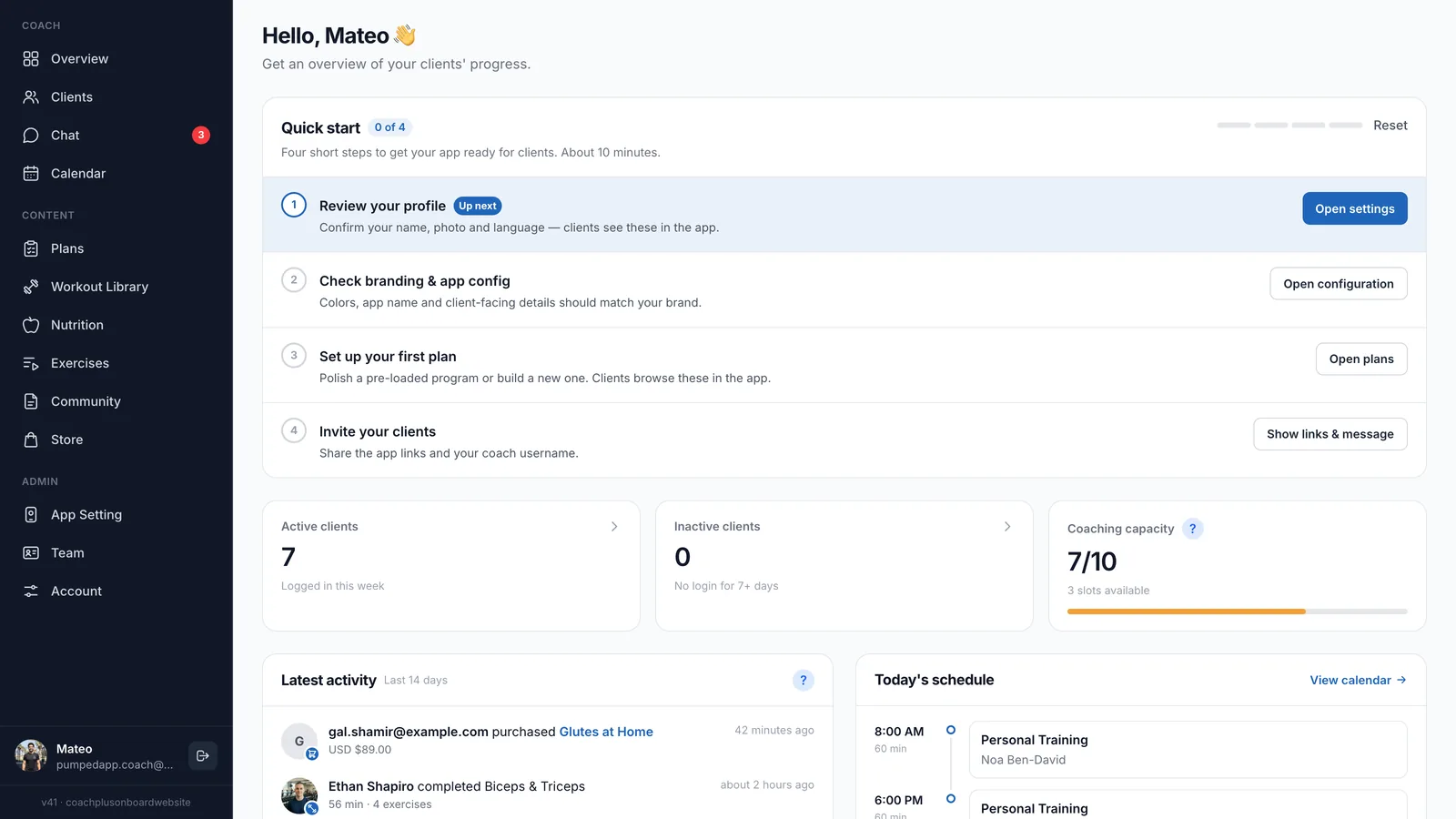
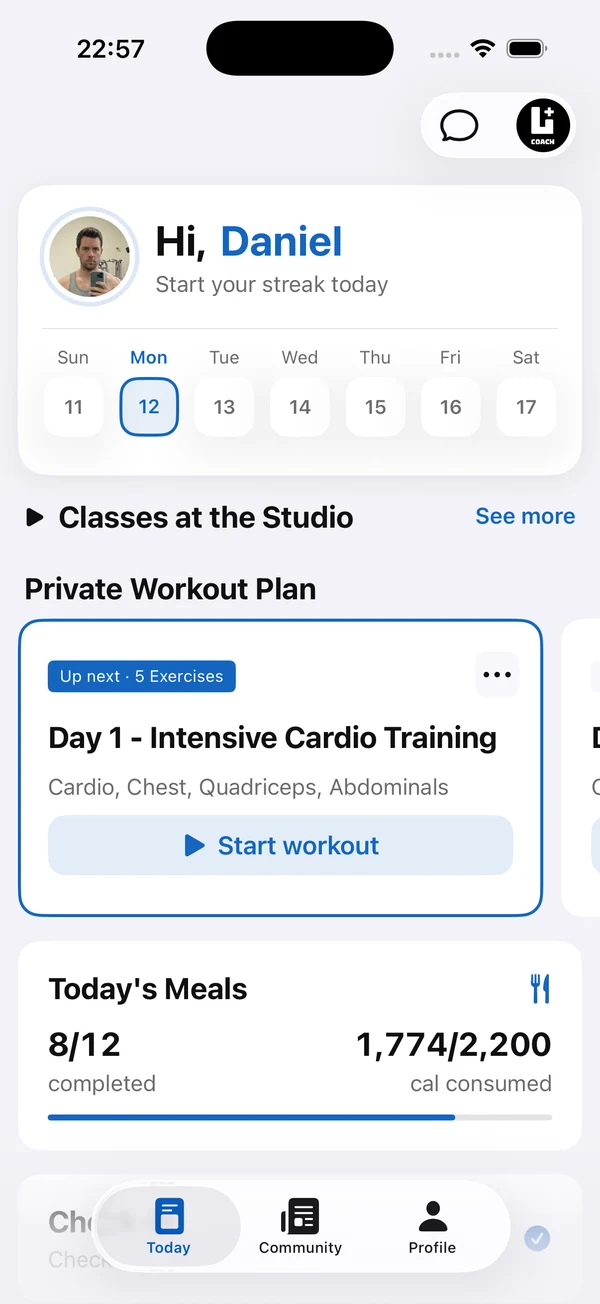
The Coach+ coaching platform gives you a coach dashboard and gives every client your own branded app, connected to it. You and your clients each have your own app, so the delivery step is ready on day one.
- New accounts come with starter plans you can edit, plus a plan editor with an exercise library and an AI assistant.
- A ready invite message with the App Store and Google Play links and your coach username, to paste into WhatsApp or your bio.
- Workouts clients log set by set, check-ins with progress photos and weight, meal plans and one chat per client.
- A community feed where finished workouts are posted automatically, and a Store for selling plans, depending on your plan.
Frequently asked questions
Can you become an online fitness coach without a certification?
In the US there’s no law that requires one, according to NASM, but most fitness insurers ask for an NCCA-accredited certification before they issue a policy. Coaching without insurance or a recognized credential puts you and your clients at risk.
Is online fitness coaching a good career?
It can be. The US Bureau of Labor Statistics projects employment of fitness trainers and instructors to grow 7 percent from 2025 to 2035, much faster than average. Online coaching adds the option to work with clients anywhere, but income depends on keeping clients long term.
How many clients does an online coach need to earn a full-time income?
Divide your monthly income target plus your business costs by your monthly price. For example, with hypothetical numbers, a $4,000 target and $300 of costs at $200 per client needs about 22 clients.
Do you need a website to start online coaching?
No. Many coaches start with a social profile, a link to an intake form and a coaching app for delivery. A website becomes useful later, when people search for you by name or you sell programs.
What app do online fitness coaches use to deliver programs?
Most use a coaching app that connects a coach dashboard to a client app for programs, logging and check-ins. Coach+ gives each client your own branded app connected to your dashboard, with a 30-day free trial and no credit card required.