BMI Calculator: Calculate Your Body Mass Index
Short answer
BMI (body mass index) is your weight in kilograms divided by your height in meters squared. WHO categories for adults: under 18.5 is underweight, 18.5 to 24.9 is normal weight, 25 to 29.9 is overweight and 30 or more is obesity. At 70 kg and 1.75 m, BMI is 22.9.
BMI
24.4
Normal weight
Healthy weight range for your height
125–169 lb
Estimates only, not medical advice.
This BMI calculator works out your body mass index from height and weight and shows which WHO category it falls in. BMI is a quick screening number used by doctors and public health bodies, and a reasonable starting point for most adults.
It has one clear blind spot: it can’t tell muscle from fat. Results are estimates and not medical advice, and the adult BMI categories don’t apply to children, teenagers or pregnancy.
How to use the BMI calculator
- 1
Enter your height
Measured without shoes.
- 2
Enter your weight
Your current body weight.
- 3
Read your BMI and category
The calculator shows your BMI and the WHO category it falls in.
- 4
Look beyond the number
If you strength train regularly, check your body fat percentage too, because BMI can put muscular people in the overweight range.
How is BMI calculated?
BMI is weight in kilograms divided by height in meters squared: BMI = kg ÷ m². The BMI calculator uses this formula directly. In pounds and inches, the same result comes from BMI = 703 × lb ÷ in².
Example: at 70 kg and 175 cm, BMI is 70 ÷ (1.75 × 1.75) = 70 ÷ 3.06 = 22.9, in the normal weight range. The same person at 85 kg would have a BMI of 27.8, in the overweight range.
What is a healthy BMI?
For adults, the World Health Organization classifies a BMI of 18.5 to 24.9 as normal weight.
- Under 18.5: underweight.
- 18.5–24.9: normal weight.
- 25–29.9: overweight.
- 30 or more: obesity.
These categories are for adults 18 and older and are the same for men and women. Children and teenagers are assessed with BMI-for-age percentiles instead.
Is BMI accurate for muscular people?
No. BMI only knows total weight, so a muscular person can land in the overweight or even obese range with low body fat.
Example: a 90 kg lifter at 1.80 m has a BMI of 27.8, overweight by the WHO chart, even at 12% body fat. The opposite happens too: someone with little muscle can have a normal BMI and a high body fat percentage. For people who strength train, the body fat calculator and the lean body mass calculator give a clearer picture, and a waist measurement adds useful context.
How coaches use BMI with clients
Personal trainers and online coaches treat BMI as a starting reference, not a goal. It helps at intake, especially for clients with a lot of weight to lose, but it says little about progress once someone starts training.
- Record it once at intake. Note height, weight and BMI with the rest of the client’s starting data.
- Track what changes with training. Waist, body fat estimates, progress photos and strength show body recomposition that BMI misses: a client can lose fat and gain muscle with almost no change in BMI.
- Refer when needed. A very low or very high BMI, especially together with other health concerns, is a reason to involve a doctor before the plan starts.
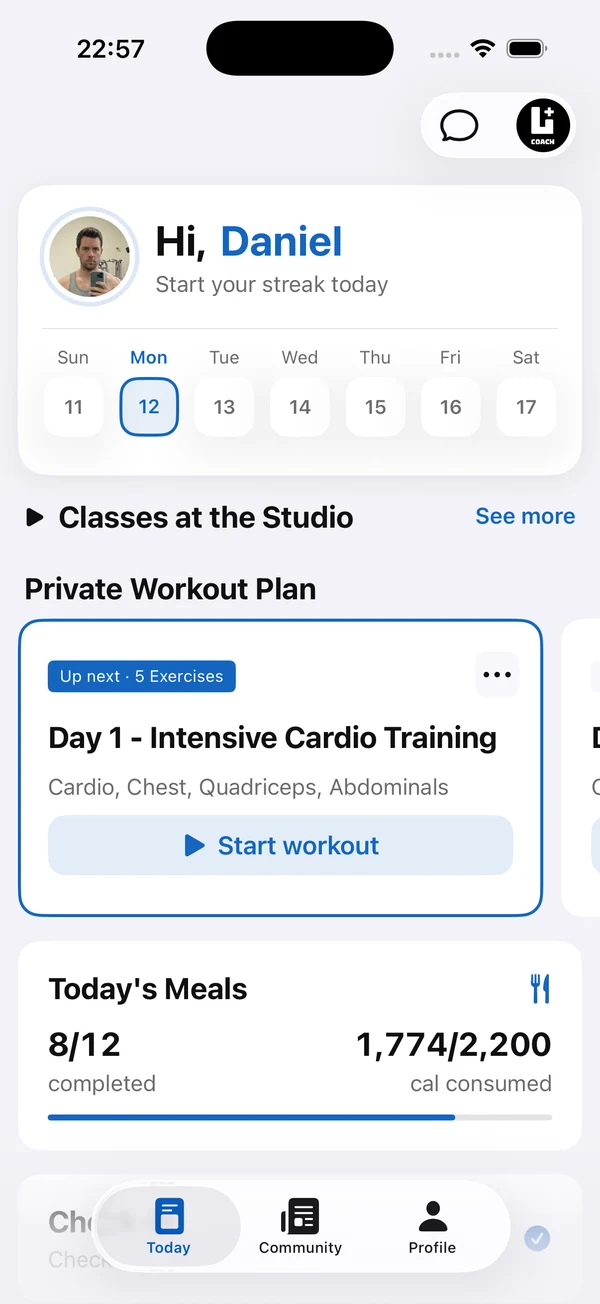
On the Coach+ coaching platform, clients log workouts and food in your branded app, and weekly check-ins with progress photos show the changes BMI can’t. You build meal plans with macro targets, and the AI assistant drafts training programs and meal plans that you review before they go out.
Frequently asked questions
What is a healthy BMI?
For adults, the WHO considers a BMI of 18.5 to 24.9 normal weight. Below 18.5 is underweight, 25 to 29.9 overweight and 30 or more obesity.
How do you calculate BMI?
Divide weight in kg by height in meters squared: 70 kg at 1.75 m gives 70 ÷ 3.06 = 22.9. With pounds and inches, multiply weight by 703 and divide by height in inches squared.
Is BMI accurate?
BMI is a useful screening tool for populations and a rough guide for most adults, but it doesn’t measure body fat. It can overestimate fat in muscular people and underestimate it in people with little muscle.
What BMI is considered obese?
The WHO classifies a BMI of 30 or more as obesity in adults.
Is BMI different for men and women?
No. Adult men and women use the same formula and the same categories, even though women typically carry more body fat than men at the same BMI.