Personal Trainer Intake Form: The Questions to Ask Every New Client
6 min read · Updated Oct 15, 2026
Short answer
A personal trainer intake form collects what you need before the first session: health screening and injuries, the client’s goal and deadline, training history, available days and equipment, sleep, stress, food habits and what made them quit before. Keep it to about fifteen questions and use every answer to shape the first program.
A personal trainer intake form is the first thing a new client fills out, and it decides how good the first program can be. Ask too little and you guess. Ask fifty questions and the client stalls before they ever train with you.
This guide covers what an intake form is for, the questions worth asking in five short groups, a few you can skip, and how to turn the answers into a first week that fits the client.
What is a personal trainer intake form for?
It gives you enough information to train a new client safely and to write a program that fits their life, before you meet them or right at the start.
- Safety. Injuries, medical conditions and medication change what you program. You want to know before the first session, not halfway through it.
- A program that fits. Three free days and a home gym call for a different plan than five days in a full gym.
- Expectations. Writing down the goal and the timeline lets you correct an unrealistic one early, before it turns into disappointment in month two.
- A baseline. Starting weight, photos and a few current lifts give you something to compare against in four weeks.
What questions should a personal training intake form ask?
Group them into health, goals, training history, lifestyle and nutrition. About fifteen questions in total is enough for most clients and takes ten minutes to fill out.
- 1
Health and screening
Current or past injuries, medical conditions, medication, surgeries in the last two years, and whether a doctor has limited their exercise. Many trainers use the PAR-Q+ questionnaire as the screening part.
- 2
Goal
What they want to change, why now, and by when. Ask for one main goal, not a list of five.
- 3
Training history
How long they have trained, what they did, what they enjoyed, and what made them stop last time.
- 4
Schedule and equipment
Which days and how long per session, and where they train: full gym, home gym, or bodyweight only.
- 5
Lifestyle and nutrition
Hours of sleep, stress from 1 to 10, type of work, how many meals a day, foods they won’t eat, and any diet they follow for health or religious reasons.
Is a PAR-Q enough for health screening?
A PAR-Q is a solid starting point, but it only screens. It tells you when to stop and ask for medical clearance, not how to program around a bad knee.
- If the client answers yes to any screening question, ask for clearance from their doctor before training hard.
- Add open questions about injuries and pain, since a PAR-Q won’t tell you which movements hurt.
- Check what your gym, insurance or local rules require. Some studios also ask for a signed health declaration.
Which intake questions can you skip?
Skip anything you won’t act on in the first month. Every extra question makes the form longer and the start slower.
- Detailed food diaries. A week of logging inside a nutrition tracker gives you better data than a client’s memory of what they usually eat.
- Every max lift. Test a few lifts in the first sessions instead. Numbers from two years ago don’t help much.
- Ten goal questions. One main goal and one reason is clearer than a long ranking exercise.
What should you do with intake form answers?
Turn them into the first program within a day or two, and reply with one or two things you noticed so the client knows the form was read.
- 1
Flag anything that needs clearance
Deal with health answers first. Everything else waits until that is settled.
- 2
Match the plan to the schedule
Build around the days and equipment they actually have, not the ideal split.
- 3
Plan around the last dropout
If they quit last time because sessions were too long, keep the first month short.
- 4
Set the baseline
Weight, progress photos and two or three starting lifts, so the first check-in has something to compare against.
How Coach+ helps after the intake form
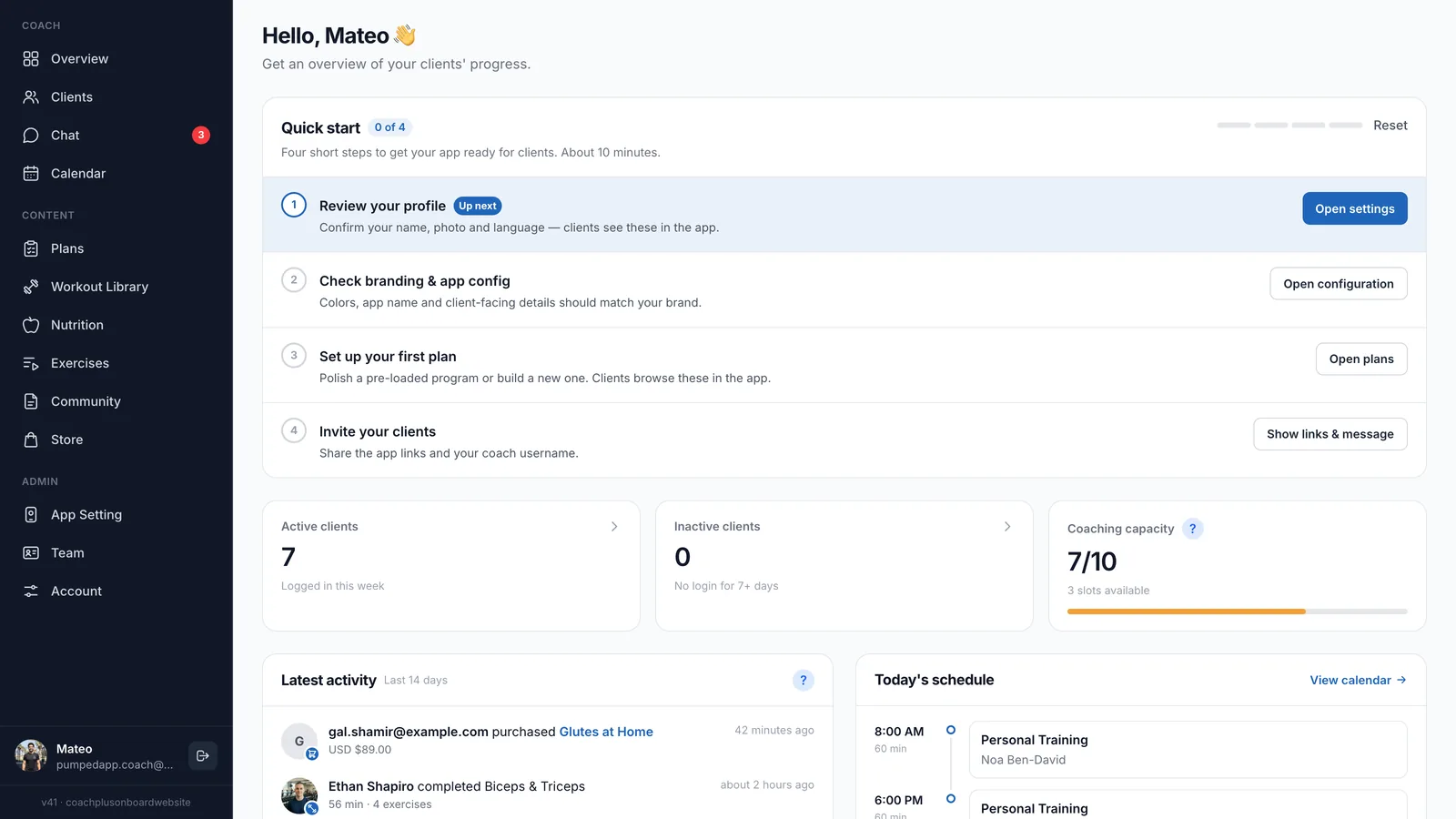
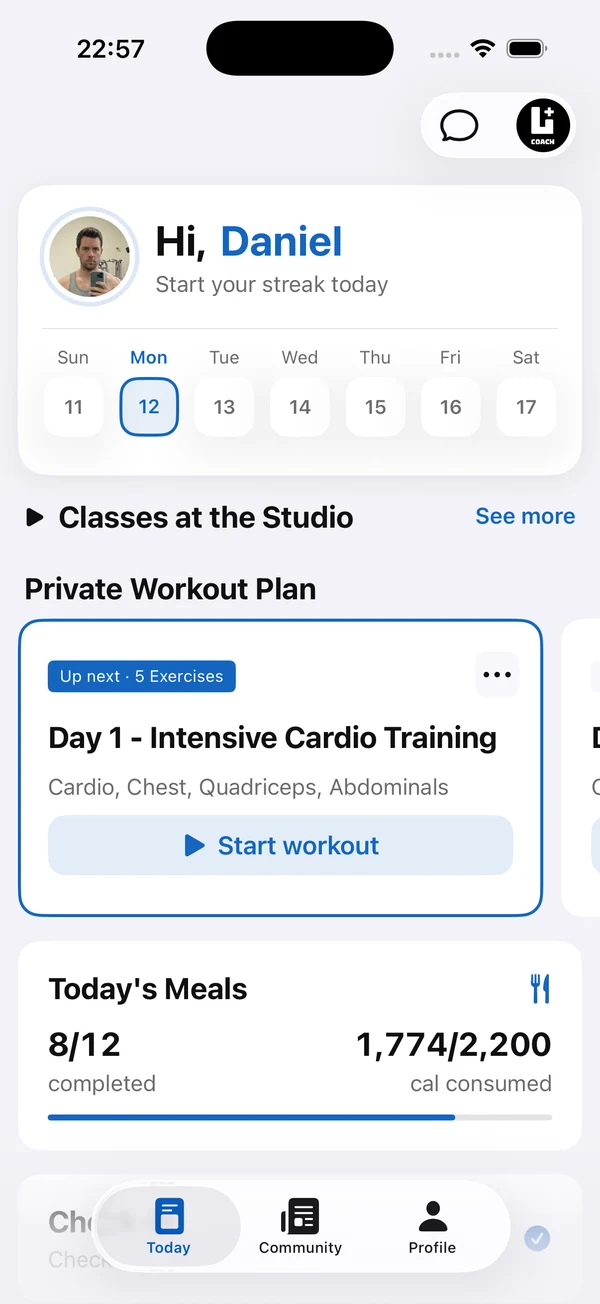
Coach+ is where the intake answers turn into a plan the client can start in your own branded app.
- AI drafts a training program and a meal plan from what you know about the client, and you review them before the client sees anything. Existing Excel or PDF programs can be turned into plans too.
- A workout builder with 500+ exercises with demo videos, plus your own custom exercises for clients with limitations.
- A nutrition builder with meal plans, templates and AI food search over 50,000+ food items, and a client tracker with barcode, photo and search.
- Weekly check-ins with progress photos, so the baseline from week one is easy to compare against.
- Messaging for follow-up questions, and a calendar with client self-booking for the first assessment session.
Frequently asked questions
How long should a personal trainer intake form be?
About fifteen questions, which most clients finish in around ten minutes. Longer forms delay the start, and many answers are easier to collect in the first sessions or from a week of logging.
Should the intake form be filled out before the first session?
Yes, at least the health screening part. You want to know about injuries and medical conditions before the client trains, and the rest lets you prepare a first program that fits.
What is the difference between an intake form and a PAR-Q?
A PAR-Q is a short health screening questionnaire. An intake form includes screening but also covers goals, training history, schedule, lifestyle and nutrition, so you can build the program.
Do online coaching clients need a different intake form?
Mostly the same questions, with more detail on equipment and schedule since you won’t see their gym. Ask for starting photos and weight as part of the intake so you have a baseline for check-ins.
How often should you update a client’s intake information?
Ask again whenever something changes, such as a new injury or a new goal, and review it briefly every few months. Weekly check-ins cover the day-to-day changes.